Garden and Planting Lighting for Pittsburgh-area homes
A garden is never static. Flowering beds, grasses, shrubs, and small trees change with weather and season. Lighting should be designed for that movement and growth.
Every property and project is different. Our conversation begins with what you want to see, how you use the space, and which parts of the home or landscape deserve attention after dark.
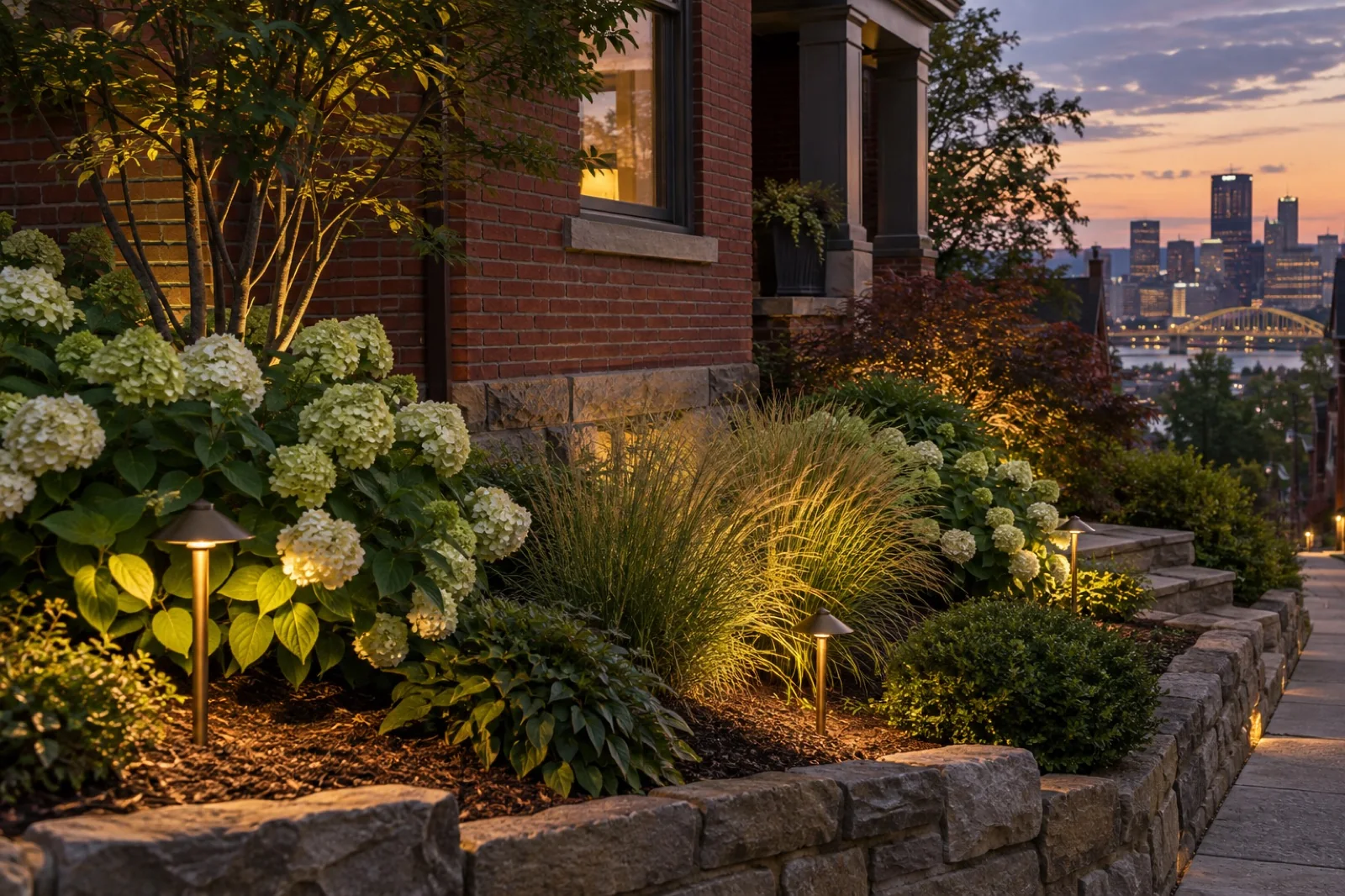
Find the structure
Start with the permanent elements: walls, paths, larger shrubs, and specimen trees. They carry the scene when seasonal flowers are gone.
Use contrast carefully
A softly lit border looks more natural when some leaves and surfaces remain in shadow. Overlighting can remove the very texture the garden offers.
Leave room to adjust
As plants fill in, fixtures may need cleaning or re-aiming. Service access is part of a practical long-term design.
The best lighting gives every evening a more considered point of view.
What a first conversation can cover
- The spaces you want to use, highlight, or navigate after sunset
- How the lighting should look from the street and from inside the home
- Whether an existing system is present and what you would like to change
- Your location in the Pittsburgh area and the next practical step
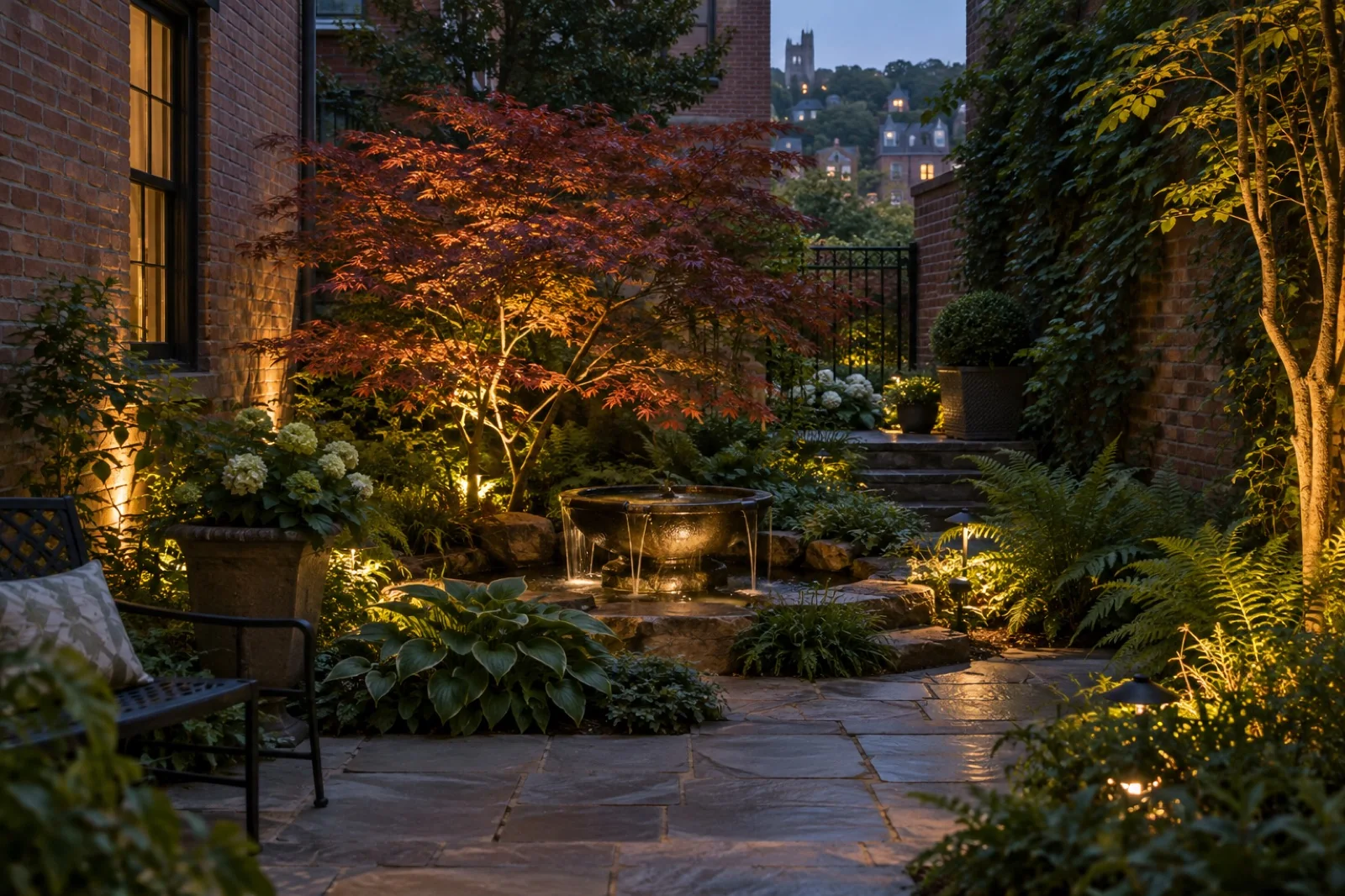
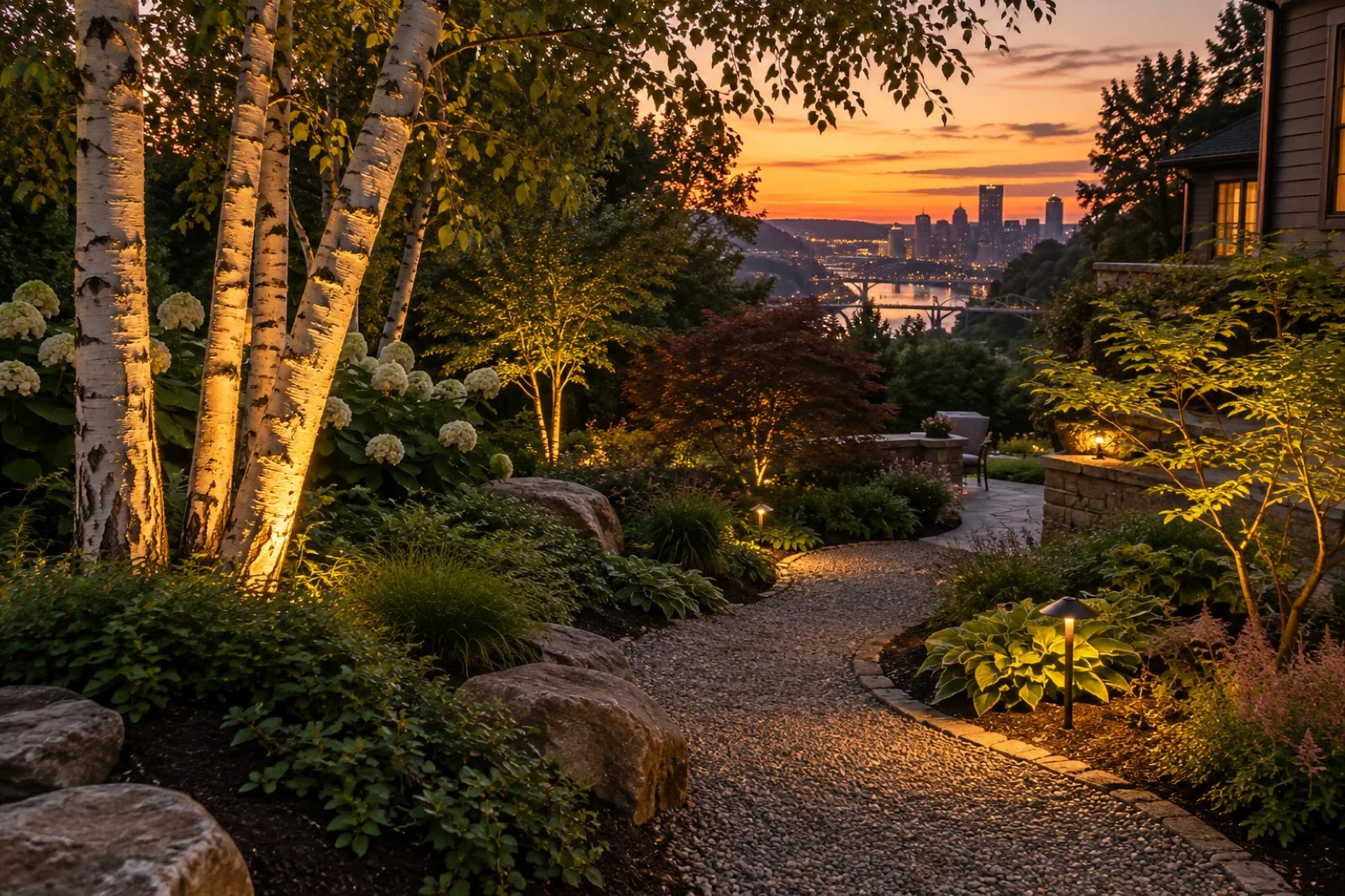
Common questions
Will fixtures show in the daytime?
Discreet placement can reduce visual clutter, depending on the bed and access.
Can lighting work in a small garden?
Yes. A small space often benefits from a few carefully chosen accents.
What happens as plants grow?
The scene should be reviewed periodically and adjusted when foliage blocks the intended effect.
Planning your installation or refresh
Review landscape lighting cost factors, what to compare in a quote, and how to prepare for a design conversation. For an existing system, see common service symptoms and LED upgrade considerations.
See more ideas in the Pittsburgh landscape lighting guide, or tell us about your property.