Courtyard lighting for Pittsburgh-area homes
A courtyard can feel larger when a feature beyond the seating area is lit and walls retain some shadow.
Use brick or stone texture as part of the composition. For Pittsburgh-area homes, this planning question belongs within a complete view of the house, outdoor route, and garden. Begin with the feature you want to improve and the viewpoint from which you will experience it.
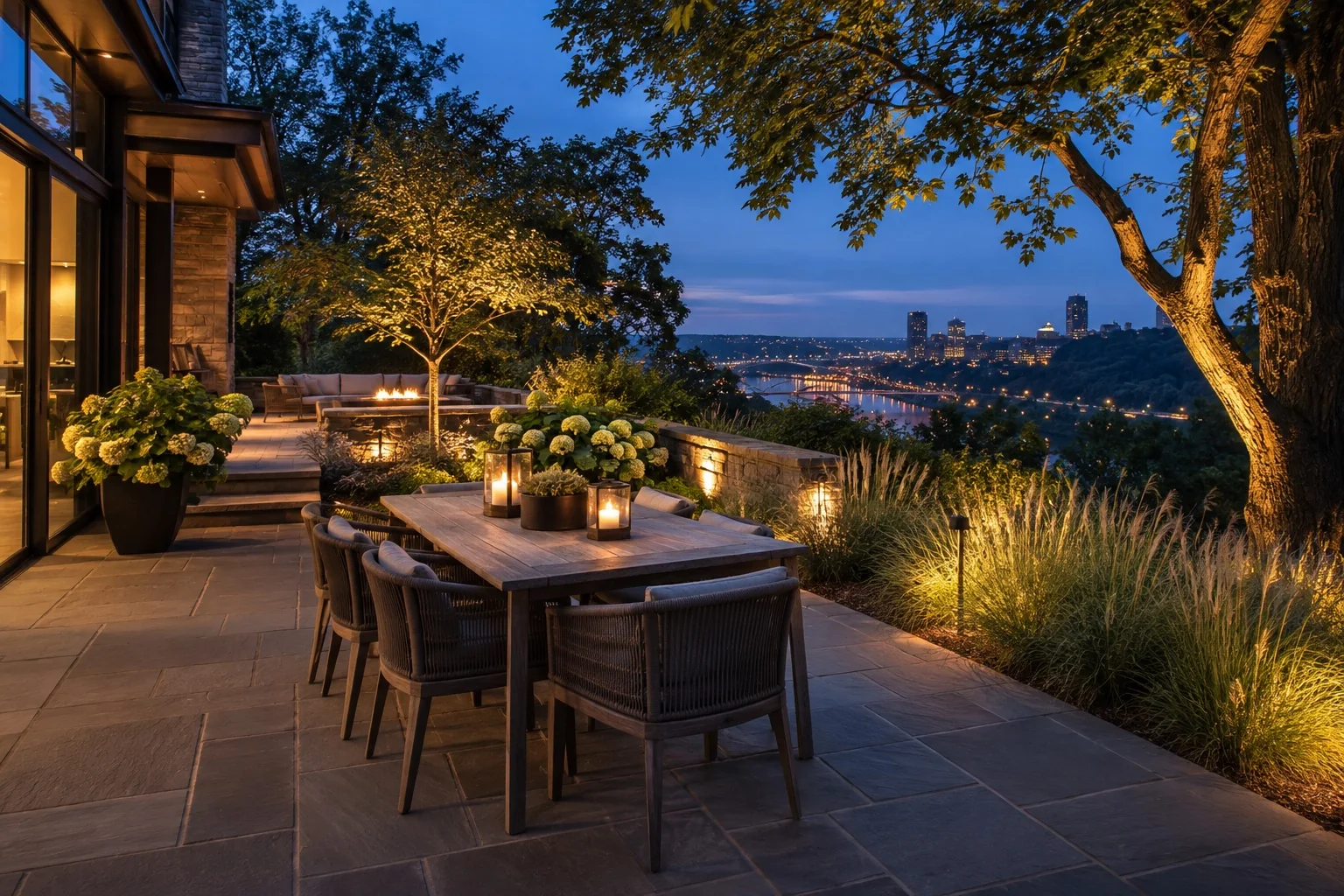
What to notice on your property
Use brick or stone texture as part of the composition. Walk the area after dark and note where you approach, pause, or look through a window. A design that appears balanced in a daytime drawing may feel different at night because surrounding areas fall into shadow.
Notice surfaces that can reflect or absorb light, nearby trees that may grow into a beam, and any view toward a neighbor. These details help make the finished scene comfortable as well as beautiful.
Compare the options for courtyard lighting
Show the places you want to use and the view you want to improve. Ask what each proposed light is doing in the composition. For courtyard lighting, that conversation should connect the specific feature with the house, the garden, and any route through the space.
Consider how the scene may change over time. Plants grow, seasons shift, and fixtures sometimes need to be adjusted. A plan with service access in mind is easier to keep looking intentional.
A practical next step
Take a few photographs from the street, the main route, and the most important indoor view. Share them with a short description of what currently feels dark, too bright, or unfinished. That gives a lighting designer a more useful starting point than a fixture count alone.
Plan installation, cost, and future service
Discuss patios and decks services alongside the design. Review what affects installation cost and use the quote comparison checklist to clarify equipment, access, controls, and adjustments.
Explore more patios and decks guides, review Lumascapes' services, or tell us about your property.